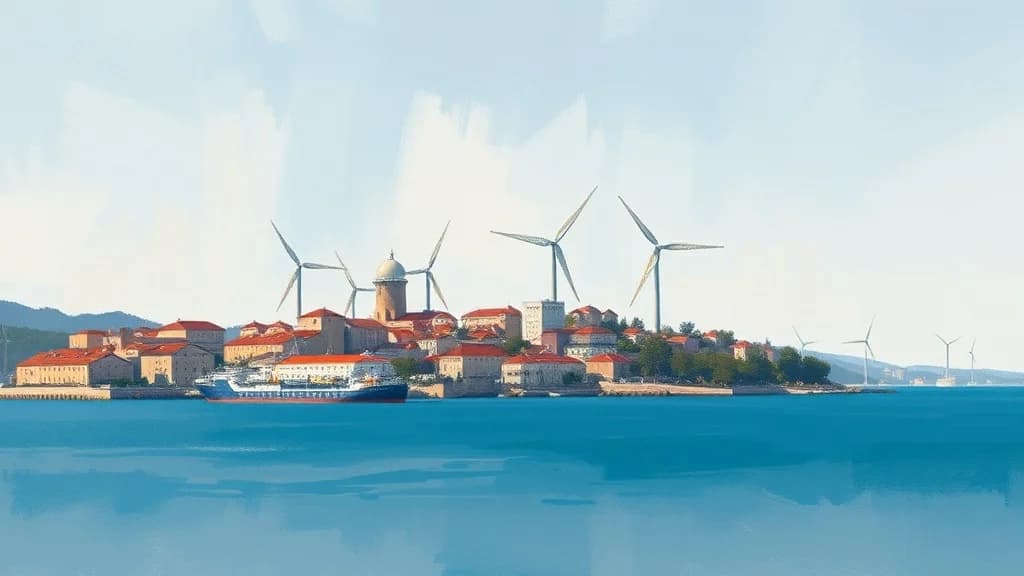
Croatia Faces Energy Insecurity Despite Regional Hub Status and Shifts to Imports
Croatia's energy sector is struggling with significant insecurity, relying heavily on imports of electricity and hydrocarbons. The country's energy independence has plummeted to a historic low of 42.5%, despite being a leader in renewable energy consumption within the EU.
Croatia imports about three-quarters of its natural gas and four-fifths of its oil. The emergence of small modular reactors (SMRs) is being discussed as a potential solution, with recent cooperation announced between Croatia and France on nuclear energy development.
However, the SMR technology is still in its infancy in Europe, primarily led by the U.S. and Canada. Concerns about the environmental impact of nuclear technology have arisen, particularly regarding the proposed location for an SMR in Plomin. Croatia aims for 57% energy self-sufficiency by 2030, yet the reliance on imports continues to grow, raising questions about the effectiveness of current energy strategies and the urgency of improving infrastructure and expanding renewable energy sources.